
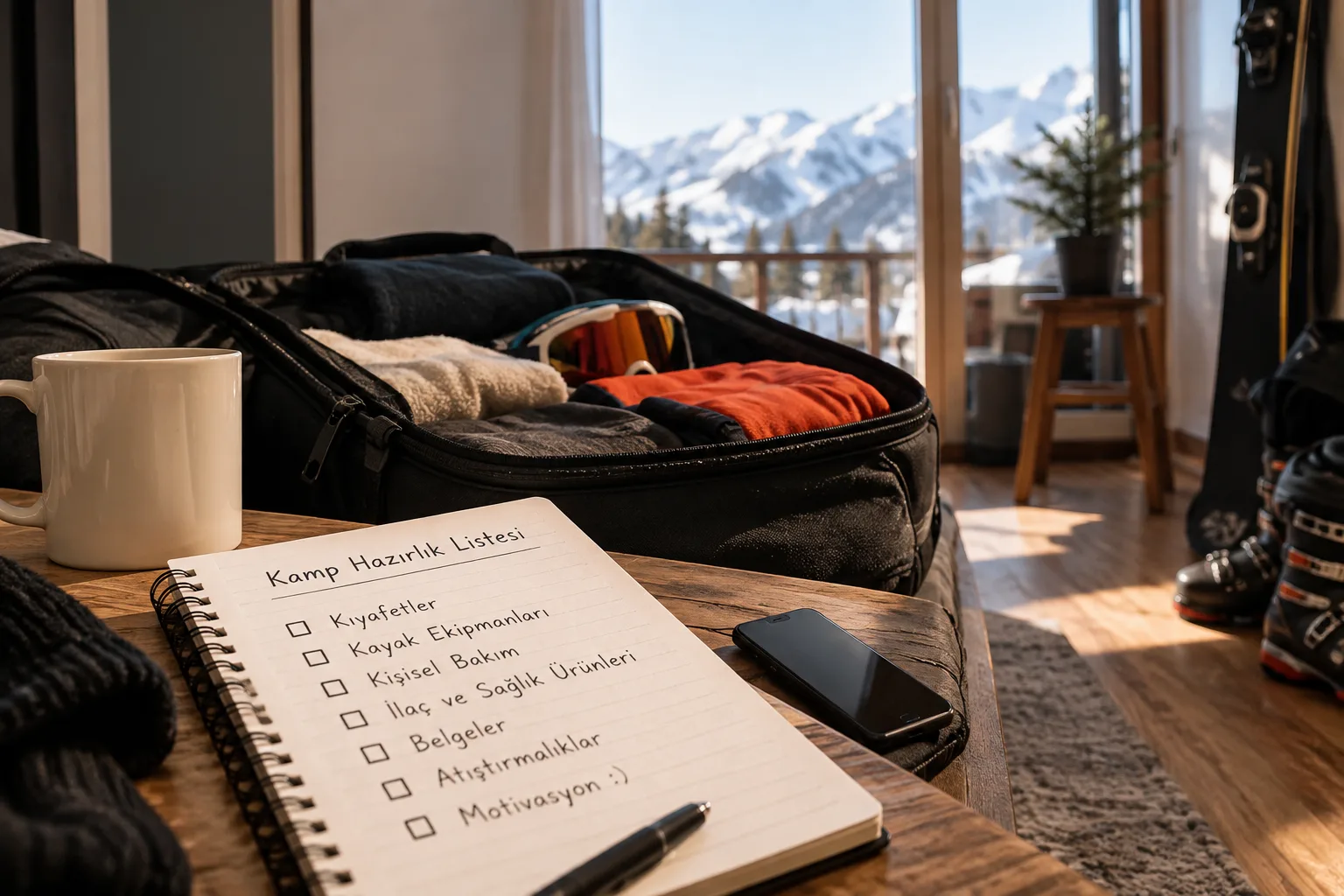
A well-packed ski bag is not the bag that contains the most things. It is the one that keeps a child dry and comfortable, makes mornings easier and provides a spare when something gets wet. Start by reading the “included” and “not included” list for your camp, because package contents can change by destination.
Check the camp package first
In the current Les Alpes domestic camp template, skis, ski boots and poles are included. Each child brings a helmet and goggles, and transport is not part of the standard domestic package. The international programme is different. Always use the detail page for your specific camp as the final reference.
The basic cold-weather system: three layers
The CDC recommends several loose layers for adults and children: an inner layer that manages moisture, an insulation layer that retains warmth and an outer layer that protects from wind and snow.
1. Base layer
Thermal top and bottom should sit close to the skin without restricting movement. Cotton retains moisture and is not a useful choice for active days. Wool and technical synthetic fabrics are more practical.
2. Insulation layer
Fleece or a light insulated layer retains body heat. One very thick jumper can restrict movement and makes it harder to adjust clothing when the child gets warm.
3. Outer layer
Ski jacket and trousers should resist water and wind. Check that cuffs work with gloves and trouser legs sit properly over boots. Gaps allow snow inside.
Packing list
- Clean ski socks for each ski day, plus at least one spare pair
- Thermal tops and bottoms
- Fleece or a light insulation layer
- Water-resistant ski jacket and trousers
- Water-resistant gloves and a spare pair
- A close-fitting neck warmer rather than a long, loose scarf
- A correctly fitting ski helmet and goggles already tested with it
- Sun protection and lip balm
- Comfortable après-ski clothes, underwear, sleepwear and closed shoes
- A named water bottle and small personal-care bag
Before the helmet and goggles go in
The AAP recommends a helmet made for skiing that fits the child correctly. It should not move around, cover the eyebrows or feel painfully tight when the chin strap is fastened. Goggles should work with the helmet without a large gap and should not restrict vision.
A helmet that has taken an impact, is cracked or has been outgrown should not be used. If the history of a second-hand helmet is unknown, damage may not be visible from the outside.
Health information is its own packing category
Regular medication should be handed over in its original packaging with the child’s name and clear instructions. Allergies, asthma, previous injuries, dietary restrictions and additional support needs should be written on the application. Telling only the child, without informing the team, is not safe.
Common packing mistakes
- One pair of gloves: once wet, the rest of the day becomes difficult.
- Very thick socks: they can change boot fit and compress the foot.
- Buying everything new: discomfort is then discovered on the slope.
- Leaving items unnamed: similar helmets, gloves and thermals are easily mixed up.
- Packing without the child: recognising their own kit supports independence.
Close the bag together the night before. Knowing where each item is helps both the child and the team during morning preparation.