
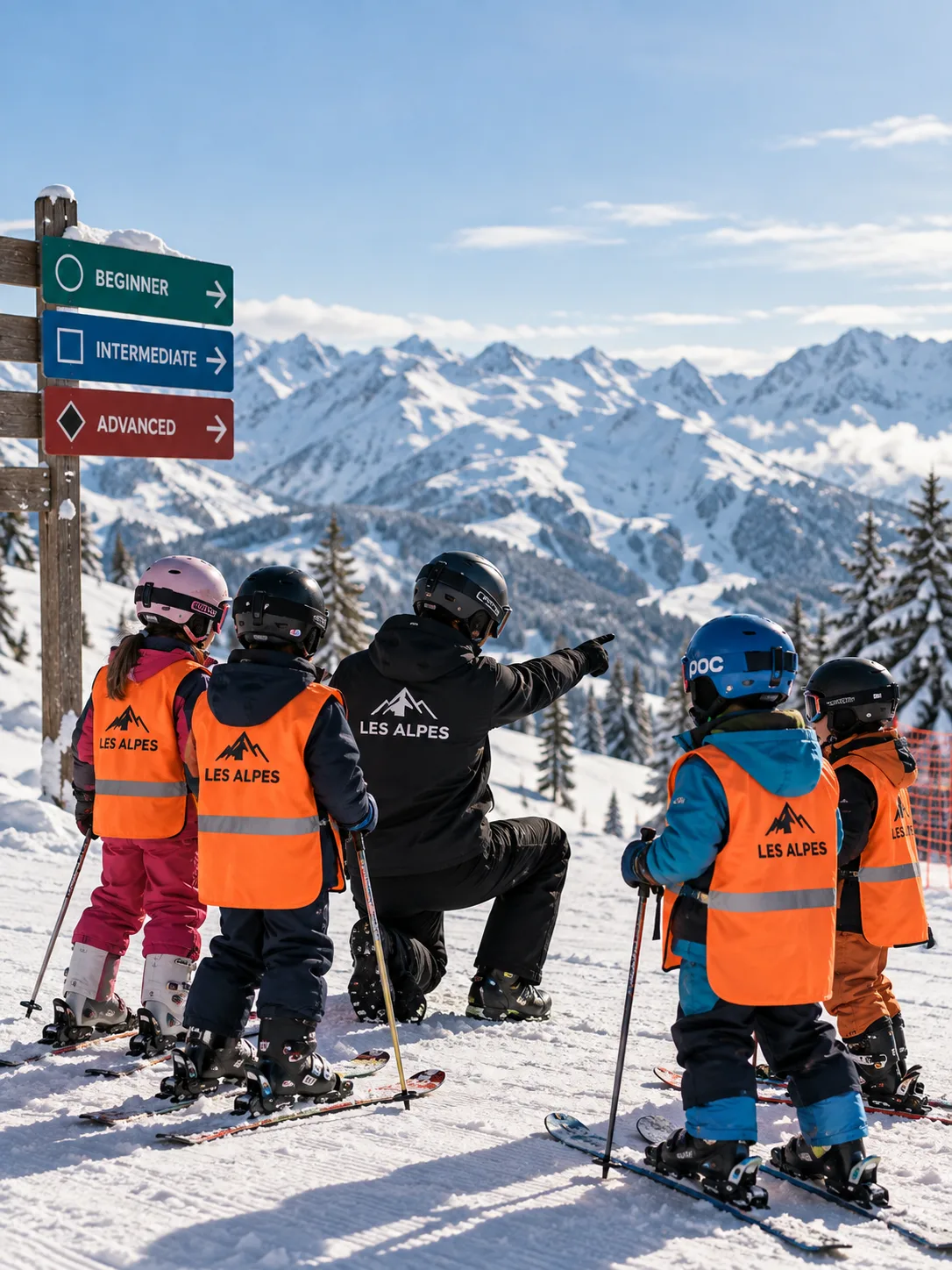
Ski safety is not as simple as “helmet on, job done”. One measure is not enough if equipment does not fit, a child moves onto terrain beyond their level or the session continues after fatigue changes their technique. Safety is a system in which preparation, supervision, terrain choice, conduct and communication work together.
1. Correct equipment and correct fit
The American Academy of Pediatrics recommends a properly fitting helmet designed for skiing or snowboarding. A helmet helps reduce the risk of serious injury, but it cannot prevent every injury and does not replace controlled skiing.
- The helmet should not move around, block vision or be used with the chin strap open.
- Goggles should work with the helmet, reduce glare and preserve the field of view.
- Skis and bindings should be adjusted for the child’s height, weight and ability.
- Wet gloves or inadequate outer layers reduce comfort and concentration.
2. Small groups and real supervision
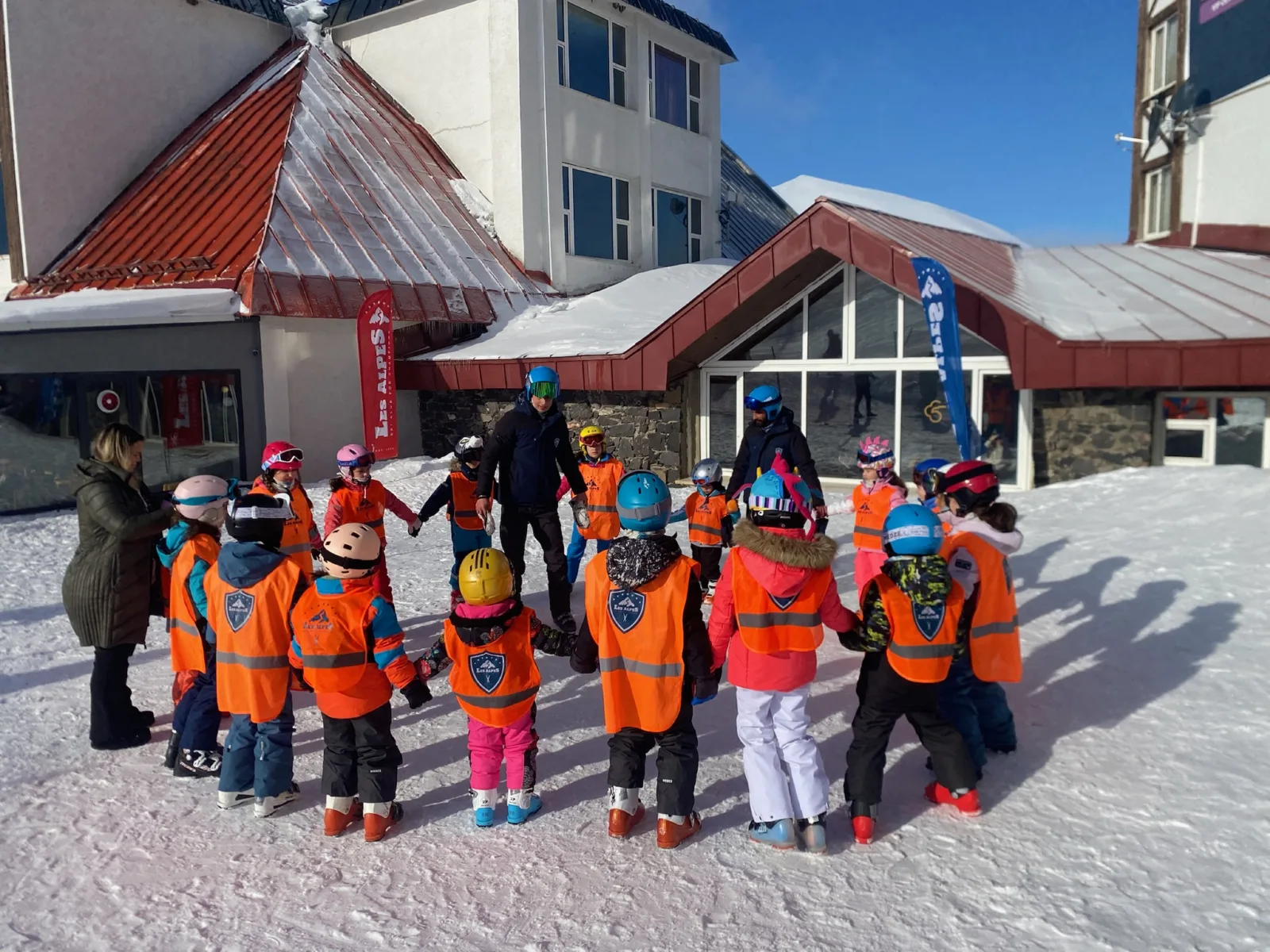
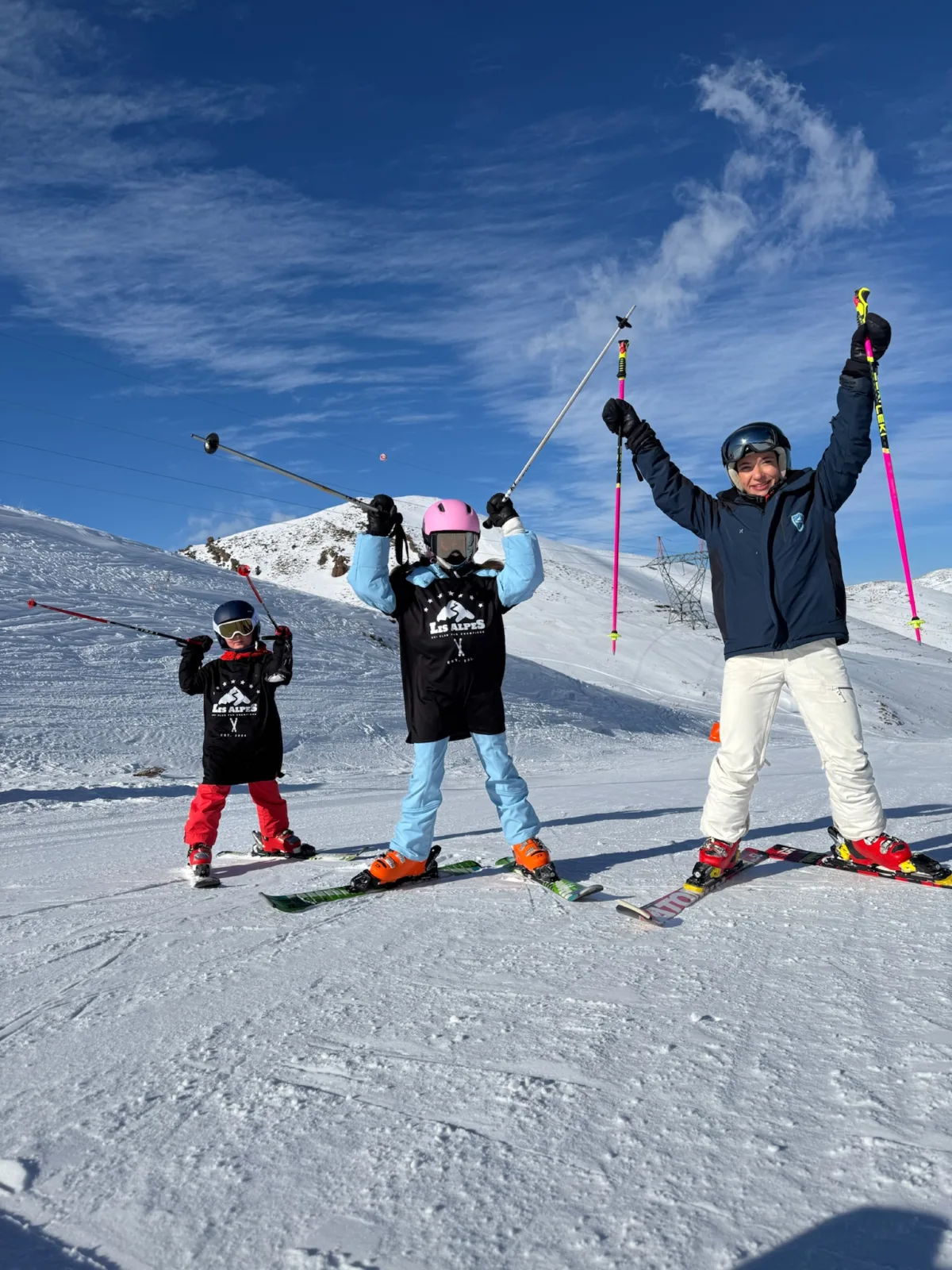
Current Les Alpes camp templates set a maximum of three athletes per coach. Junior athletes are taught one-to-one. This ratio supports not only more skiing time but also the coach’s ability to observe stance, route choice and signs of fatigue.
A small group does not guarantee that children can never become separated. Stopping points, lift queues and the order followed on the run still need to be explained clearly at the start of a session.
3. Terrain matched to level
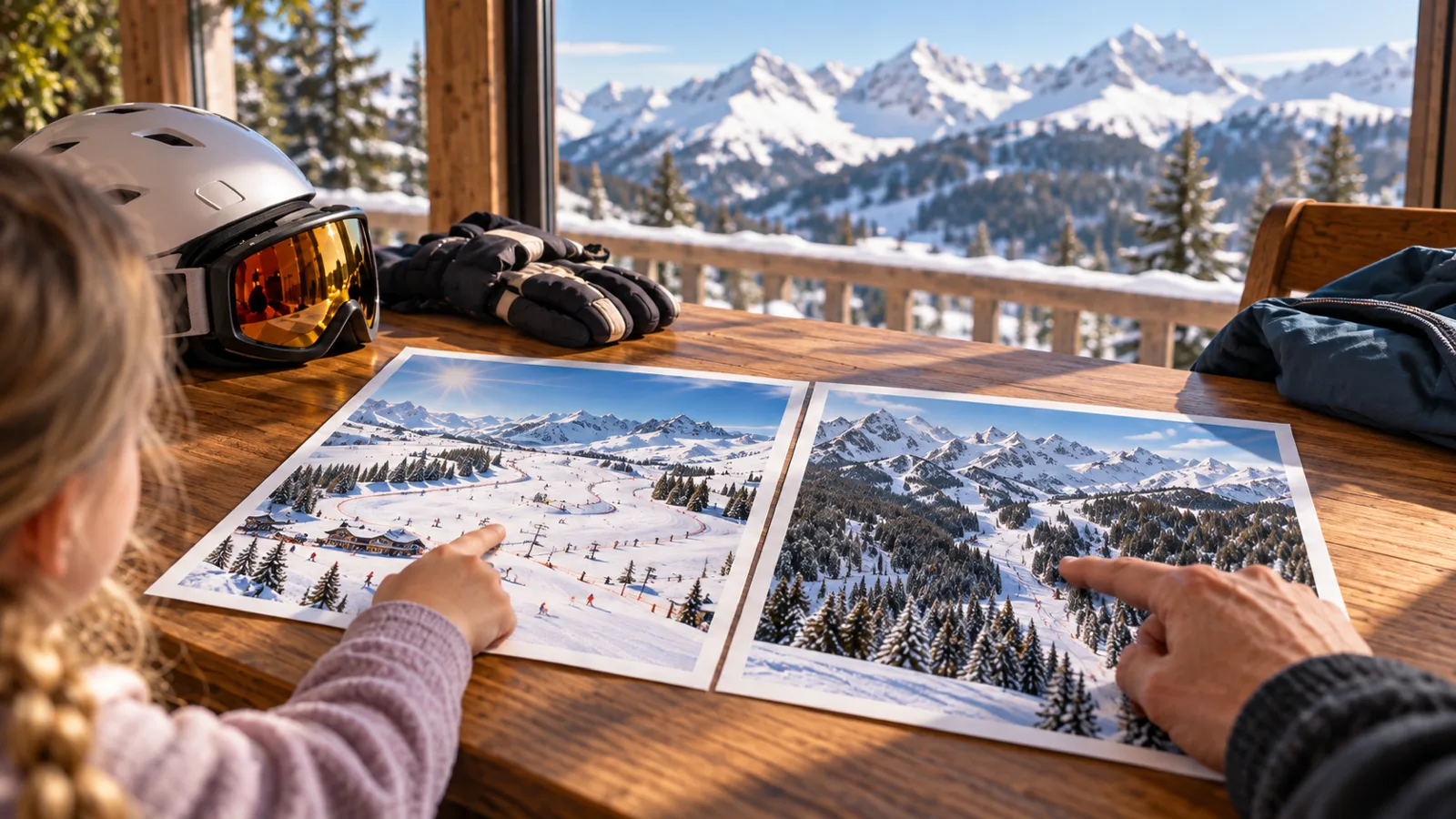
The AAP advises learners to stay on terrain suited to their ability. Feeling brave is not the only test for moving to a harder run. Braking, linked turns, speed adjustment and the ability to stop when something unexpected happens need to be considered together.
Snow, fog, wind, traffic and visibility change through the day. A run that works in the morning may not be the right choice later. The programme may change in response to weather and resort decisions.
4. Conduct that applies to everyone on the slope
The FIS Code of Conduct for Skiers and Snowboarders defines a shared language for the piste. In age-appropriate words, children learn to:
- Adjust speed to ability, terrain, weather and traffic.
- Respect the right of way of the skier ahead.
- Look uphill and downhill before entering or restarting.
- Avoid stopping in narrow or hidden places.
- Follow signs and closed-run decisions.
- Call for assistance after an accident and do not leave without informing anyone.
5. Fatigue is safety information
A break may be needed when technique begins to collapse, falls repeat, answers become slow or a child says they are cold. A longer session is not automatically a better session. Rest, hydration and a dry-clothing check belong in the programme.
6. Health information and incident communication
Allergy, asthma, regular medication, recent injury and additional support needs should be shared in writing before camp. Families should receive the camp communication channel and emergency process in advance. After a suspected head impact or signs of concussion, the child should not return to the slope before medical assessment.
Five direct questions a parent can ask
- How and when is level assessed?
- What is the maximum number of children per coach?
- How are helmet and goggle fit checked?
- How does the programme change when weather or terrain changes?
- Who receives medical information and emergency contacts?
A safe programme is not one that claims risk does not exist. It is one that identifies risk, changes decisions when conditions change and communicates clearly with families.