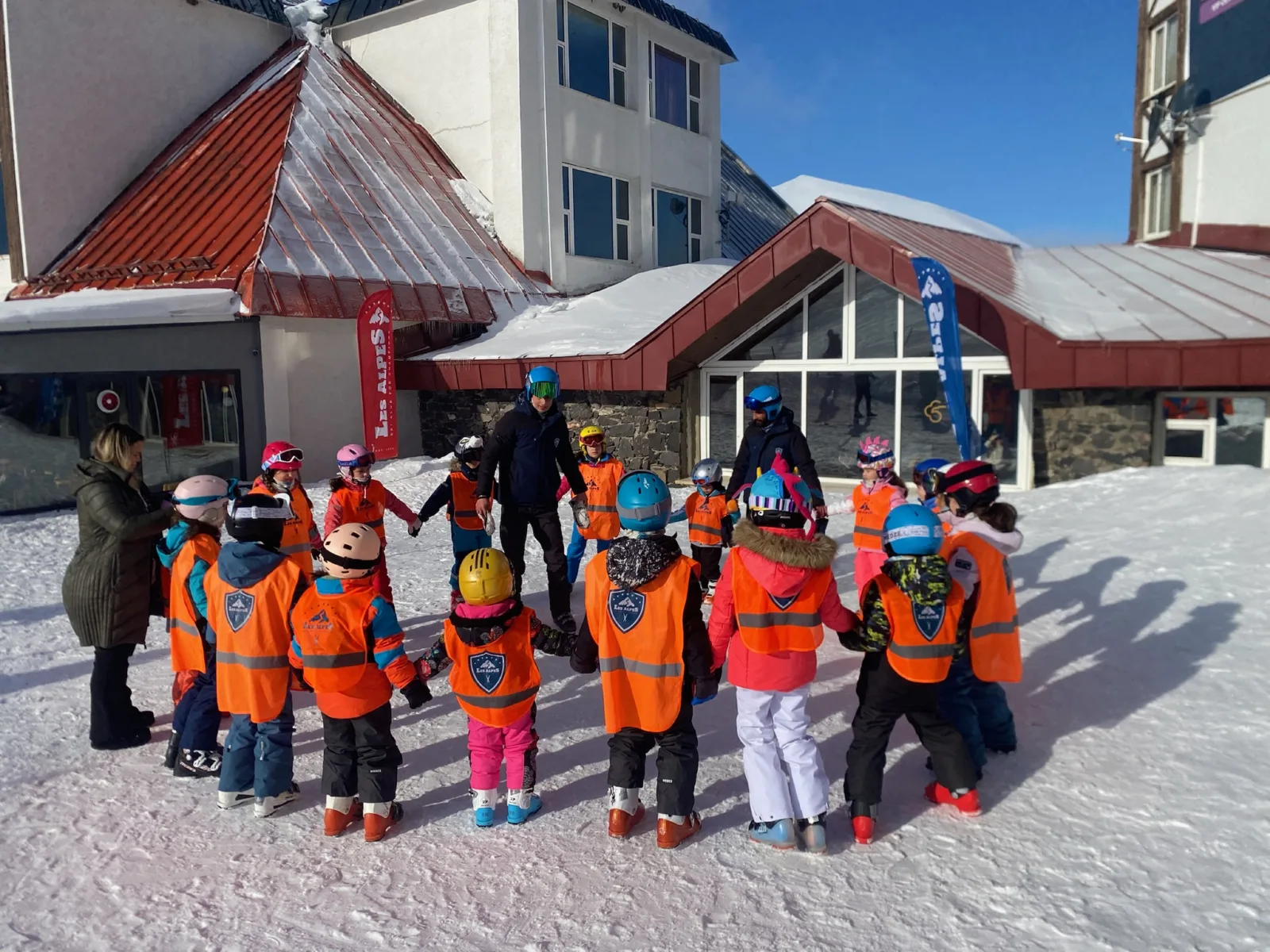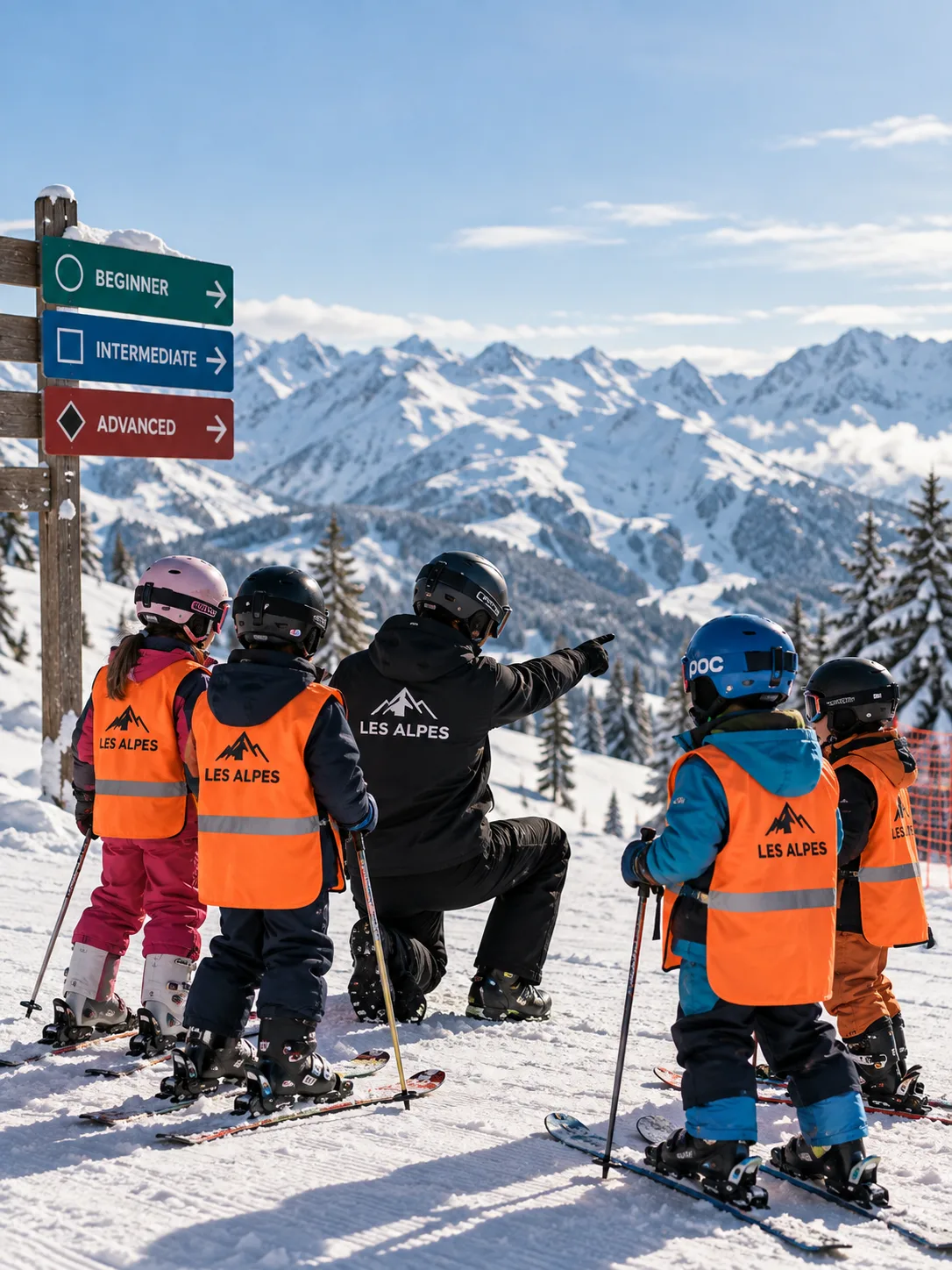

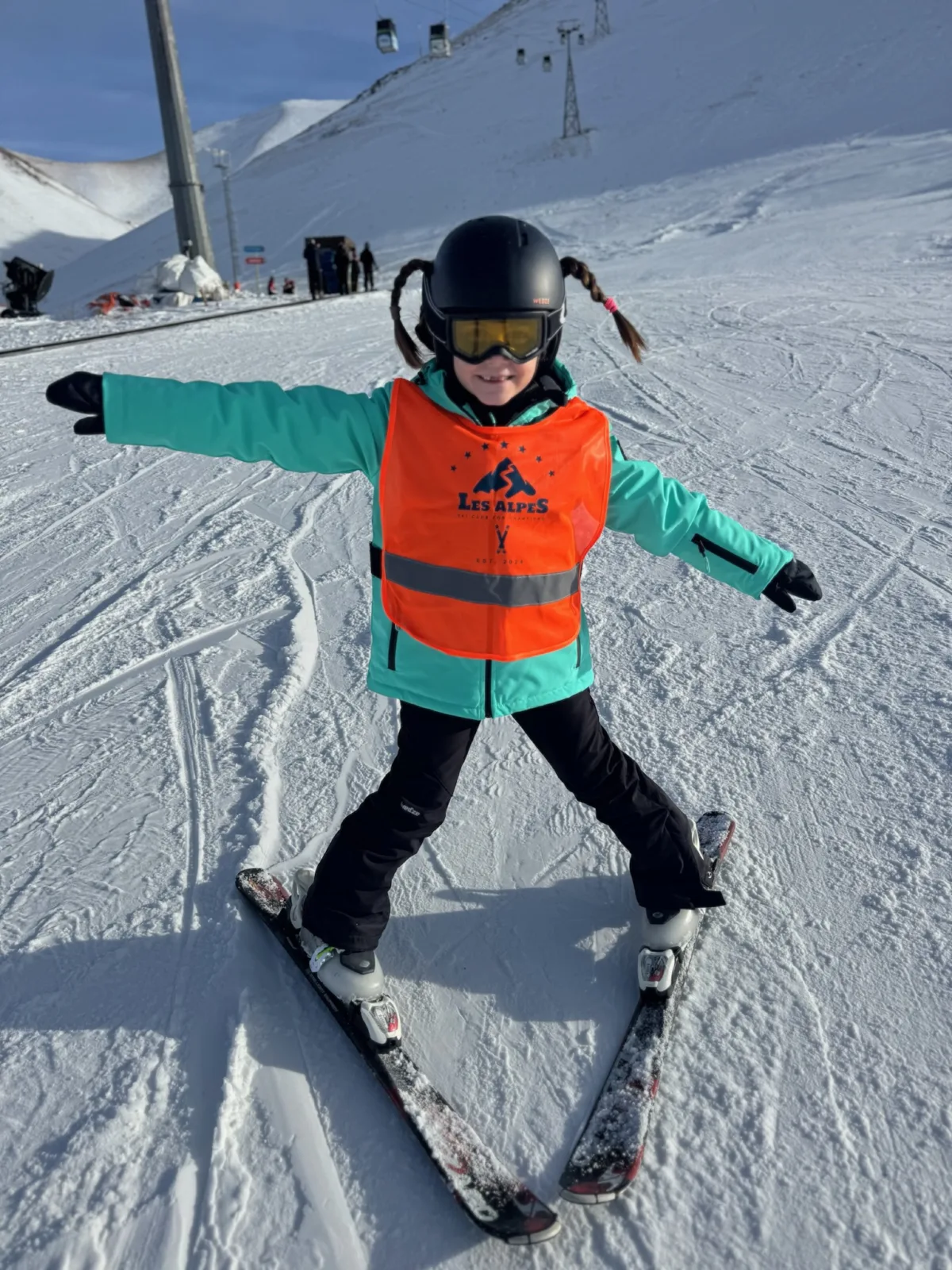
A kids ski camp is a learning programme in which the day is planned rather than improvised. Equipment fitting, level assessment, on-slope practice, rest and the end-of-day review all belong to the same process. The aim is not simply for a child to “go skiing”, but to progress safely, understand what they are learning and gain responsibility in a mountain environment.
Readiness is not decided by age alone
The American Academy of Pediatrics advises parents to consider physical strength, the ability to cooperate and the ability to follow instructions alongside age. Two children of the same age may therefore be ready in different ways.
In the Les Alpes programme, Junior athletes aged 3.5–5 work one-to-one. From age five, children may move into small groups when their level and readiness are suitable. This is not a universal timetable; it is the teaching approach in our current programme.
A four-part readiness check
1. Can your child spend a day away from you?
If school, nursery, a sports class or another daytime programme already feels manageable, the transition to camp is usually easier to understand. Finding the first separation difficult does not automatically mean “not ready”; the useful sign is whether the child can settle and connect with the responsible adult.
2. Can they follow short, clear instructions?
Directions such as “wait here”, “follow the coach” and “stay still with your equipment on” are part of slope safety. Perfection is not expected. A willingness to listen is.
3. Can they say when they are cold, tired or uncomfortable?
Skiing is physical activity in a cold environment. When a child can describe what they feel, the coach can choose the right moment for a break. Any chronic condition, allergy, regular medication or additional support need should be shared fully during registration.
4. Does some of the curiosity belong to the child?
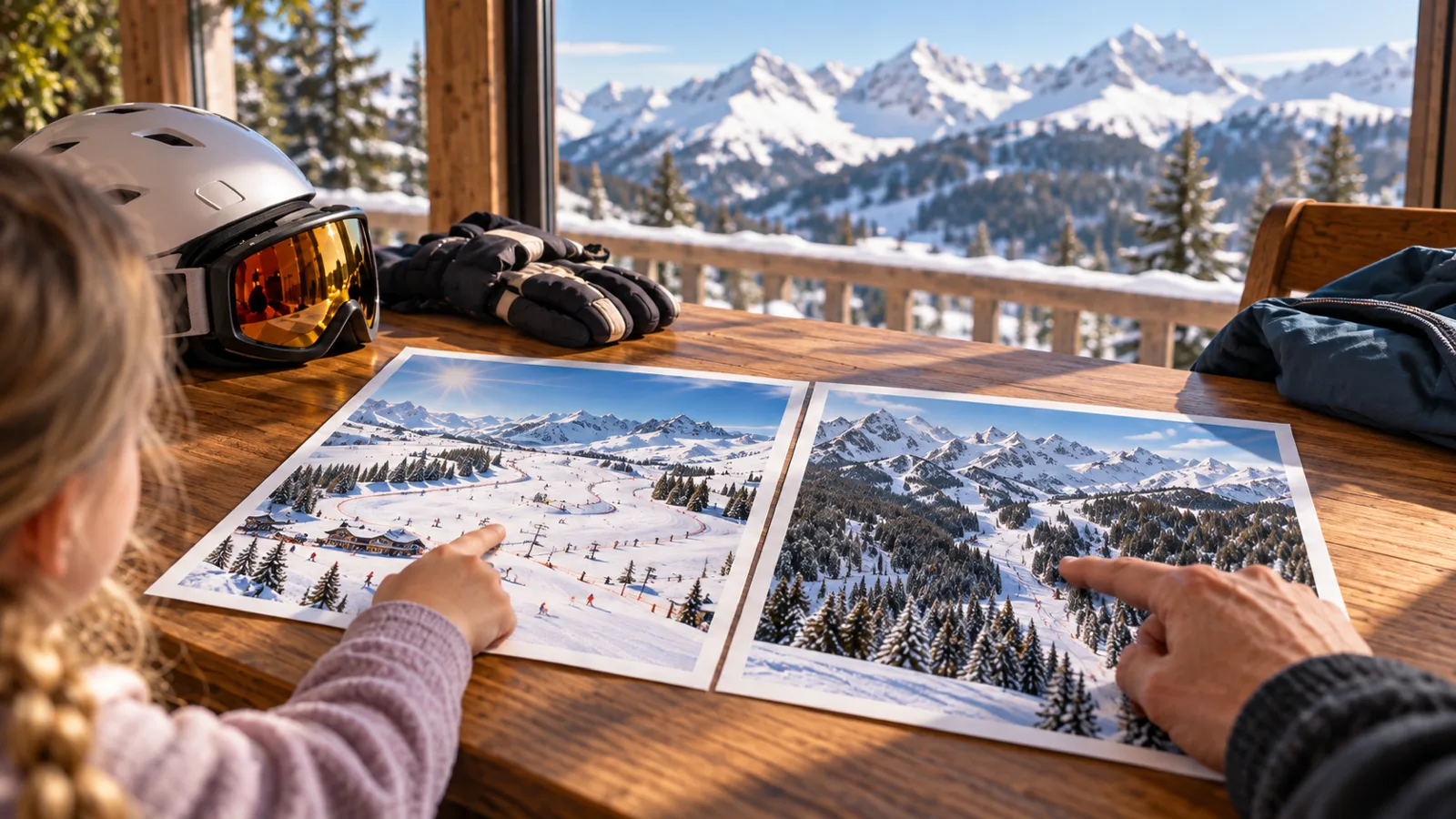
A little hesitation is normal. But if camp is only an adult goal, the first day can become an unnecessary struggle. Looking at photos, trying equipment in advance and answering the child’s questions all reduce uncertainty.
Parent checklist before camp
- Do not present camp as an exam or a demand to succeed.
- Try the helmet and goggles together at home; check pressure points and field of vision.
- Record sleep, food, allergy, medication and support needs on the application.
- Do not overstate the child’s level; the first assessment happens on snow.
- Keep the goodbye short, clear and reassuring.
What should you expect on day one?
The goal of the first day is not to cover as much terrain as possible. Our domestic camp template includes hotel check-in, equipment fitting and a two-hour level assessment. Coaches observe stance, balance, braking and general confidence, then form groups from what they see.
The correct starting level is not a label; it is the starting point for safe learning. If you are unsure, sharing the child’s age, previous ski experience and experience of time away from home is the most useful first step.