Skip to content


The Road to the Race Team: Skiing in Children How to Improve Performance? This is a profound question that requires a joint effort not only from talented athletes, but also from their families and coaches. Performance development requires systematic training, correct technique and a strong mental structure. At Les Alpes Club, we apply a scientifically based, long-term development model to fulfill our children's potential in national and international arenas. Ski performance development, with a combination of passion and discipline.
For us the road to the race team, is not only about getting through the gates fast, but also about the young athlete's ethical values, sense of responsibility and mental toughness is also to develop. Technical and physical preparation is only a part of this holistic development. You can review our detailed programs on our Race Programs page.
In children Ski Performance How does it develop? The technical answer lies in the adaptation of basic skills to the race environment. Disciplines such as Slalom (SL) and Grand Slalom (GS) have different technical expectations.
Slalom requires the shortest and fastest turns. Child athletes learn to ski close to the gates, catch the right angle and transfer body weight instantaneously. Rhythm and baton handling, Slalom performance are key points. Training focuses on minimizing reaction time.
The Grand Slalom requires longer turns, higher speed and the ability to find the right line on the track. Ski performance development for GS challenges athletes' leg strength and balance at high speed. Technical analysis aims to continuously improve the athlete's aerodynamic position on the snow.

Top level ski performance, requires exceptional physical conditioning. The training of young athletes in summer and winter directly affects their endurance and strength on the mountain.
Off-season training is the foundation of ski performance. Plyometric exercises, balance training (especially on one leg) and core strength increase explosive power while preventing injuries. Physical preparation, is the racer's greatest weapon.
Aerobic capacity needs to be high to withstand long training days. High-altitude camps increase the oxygen-carrying capacity of athletes, enabling them to endure races to the end. endurance to show their support. This, your path to the race team is indispensable.
Modern skiing requires a combination of technical knowledge with equipment knowledge. The right equipment maximizes the athlete's technical potential.
The edge angles, base wax and binding settings of racing skis have a direct impact on performance. Child athletes and their families are given detailed training on the correct care and adjustment of the equipment. Optimal ski equipment, is a guarantee of speed.
Videos taken during training allow to analyze the athlete's technical errors on a second-by-second basis. With the help of biomechanical experts, body position, tilt angle and pressure points are examined. These examinations, ski performance improvement scientific data that accelerates the pace.

The Road to the Race Team, is not only a physical marathon, but also a mental one. Mental preparation is the critical factor that determines performance on race day.
Athletes are taught breathing exercises and visualization techniques to manage pre-race anxiety. A well-defined routine allows the athlete to fully focus on the race. Mental toughness, is the hallmark of champions.
Mistakes can happen in a race, such as missing a gate or losing your balance. The important thing is to quickly learn from these mistakes and prepare for the next race. Children are instilled with the philosophy of seeing failure as a learning tool. This is a long-term performance improvement Supports.
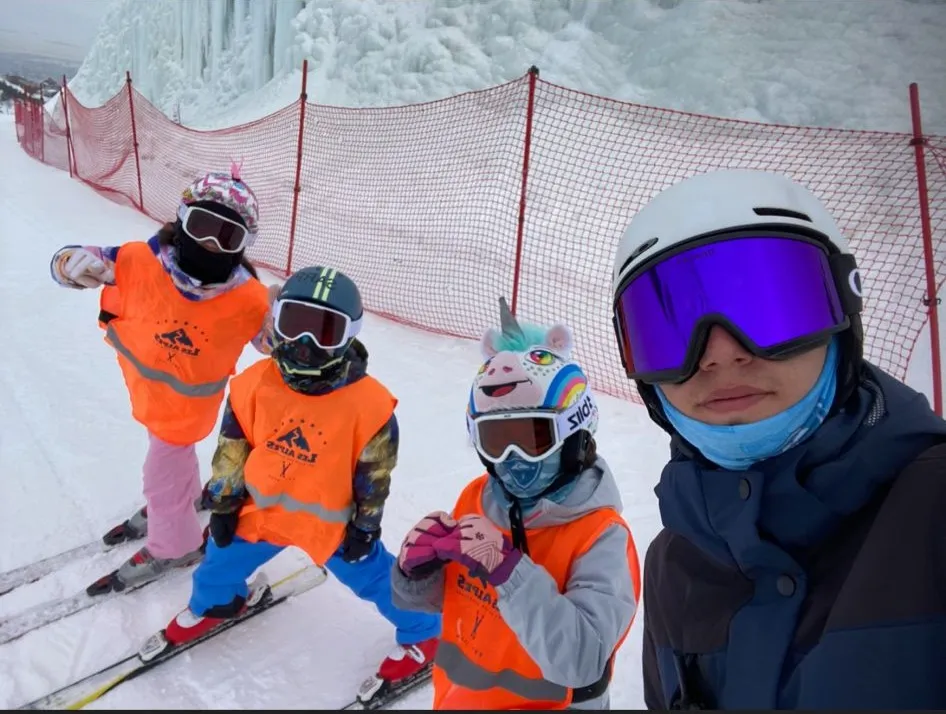
How Skiing Performance Develops in Children? The sustainable answer to this question lies in the LAD model. This model aims to enable athletes to reach their peak performance during adolescence and young adulthood.
Training loads are adjusted taking into account the physical developmental stages of child athletes. Risks of overtraining and early specialization are avoided. Rest and recovery are an integral part of training. Healthy development, your path to the race team is the foundation. For more information, please visit our Club's Approach page.
Proper nutrition is critical to keep energy levels high and speed recovery. Our sports dietitians advise young skiers on nutrition plans suitable for high-altitude conditions. Optimal ski performance the right fuel is essential.