Skip to content
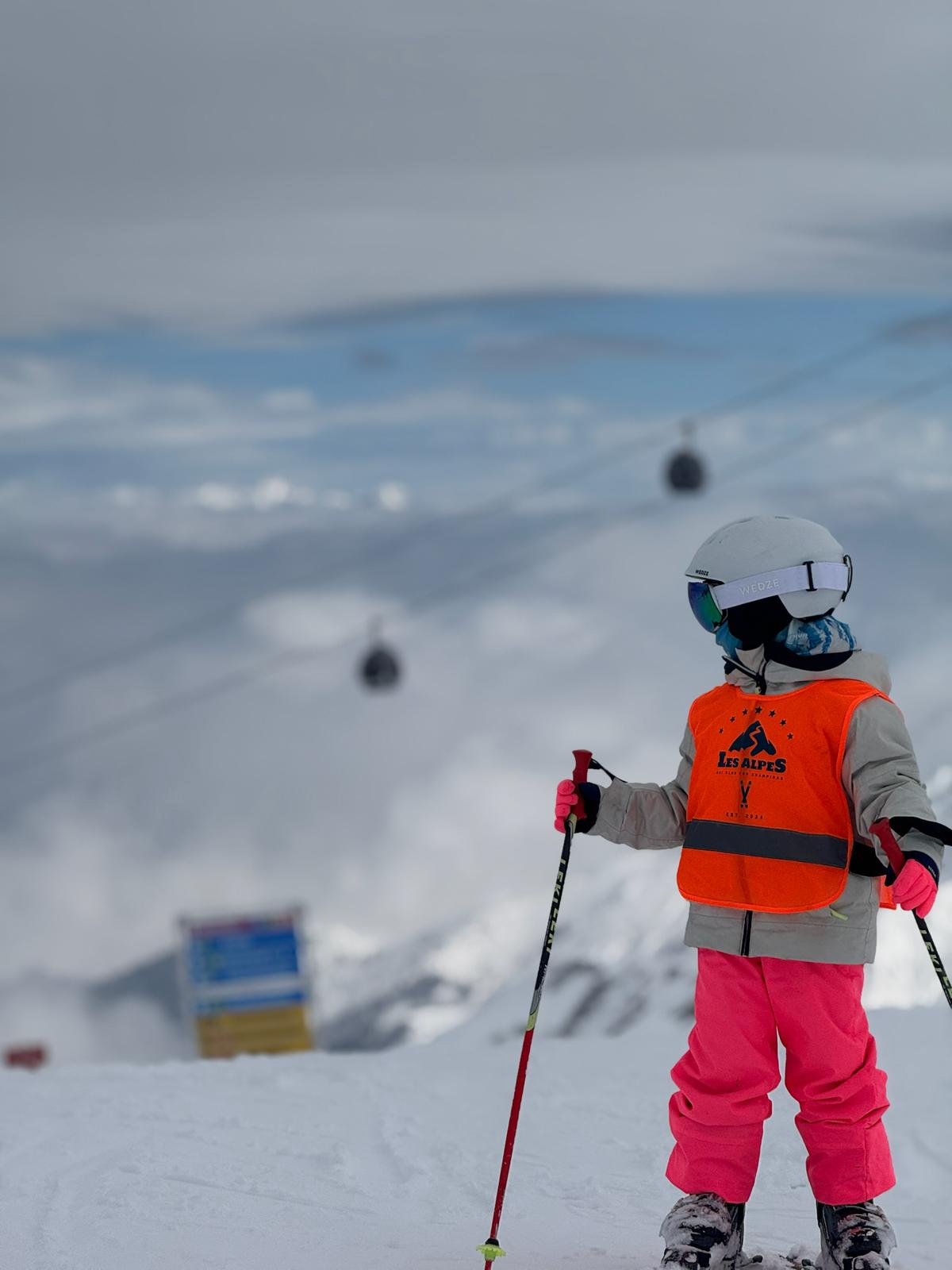
In addition to contributing to children's physical development, winter sports offer a unique activity that instills self-confidence, discipline and a love of nature. Skiing, in particular, is an enjoyable sport that can be learned from an early age and continued for a lifetime. In this comprehensive guide prepared with an institutional approach, children ski training | Les Alpes Ski Training and the process down to the smallest detail. Our aim is to help parents choose the right and safe ski training for their children, especially in light of Les Alpes' proven methodology.
Ski training, is a fun-oriented process that develops children's motor skills and coordination abilities. Training programs are designed in accordance with the age and developmental level of children. Introducing skiing at an early age allows children to quickly establish a sense of balance and gain courage for new challenges. Lessons accompanied by a professional instructor minimize the risk of possible injury, while advancing the learning process with maximum enjoyment and efficiency.
Children's flexibility, learning speed and ability to adapt to new skills are much higher than adults. It is considered ideal to start ski training around 4-5 years of age, as this is when children are ready to understand commands and perform simple physical tasks. An early start allows them to adopt skiing as a natural form of movement. This lays the foundation for them to effortlessly learn more complex techniques in the future.
Skiing is a dynamic sport that requires standing, changing direction and controlling speed. In this process, children learn to distribute their body weight correctly. In particular, movements such as standing on one leg and transferring weight while skiing support the coordinated work of the inner ear and nervous system. This development has positive effects not only on skiing but also on their general academic and sporting achievements.
The details of educational programs are vital for the safety, learning speed and comfort of the child. A quality children ski training | Les Alpes Ski Training The program should be structured by focusing on the individual needs of the student. Detailed planning directly affects the success of education.
Training usually consists of three main phases:
Each stage is supported by games and fun activities to prevent children from getting bored. Trainers constantly observe the children to make sure they are ready both physically and emotionally.
Warm-ups at the beginning of each class minimize the risk of injury by stretching the muscles. Safety is the most important element of the training. Instructors teach track rules, fall techniques and how to ask for help in a fun and understandable language. The correct use of helmets, goggles and appropriate protective equipment is an integral part of the lessons.
The main characteristics that determine the quality of a ski school are the competence of the teaching staff and the pedagogical approach. Institutions like Les Alpes place great emphasis on these characteristics.
Children learn best when they play. Modern ski training “game-based learning” methodology is used. For example, games such as “robot dance” to teach turns or “red light, green light” to teach speed control. This method eliminates the stress of learning and keeps children's motivation at the highest level. children ski training This approach to the process ensures permanent skill acquisition.
Instructors must not only have skiing skills, but also be competent in child pedagogy. Instructors must hold internationally recognized certificates (e.g. ISIA, BASI). These certificates show that the instructor is up to standard in terms of both technical knowledge and safety and teaching methods. Les Alpes maximizes individual attention and safety by planning groups with a maximum of 3 athletes per instructor.
One-to-one lessons are the most efficient option, especially for children who are distracted or learn very quickly. As with the Junior level at Les Alpes, individualized instruction is critical.
In private lessons, the instructor gives his/her full attention to a single child. In this way, the lesson program can be completely tailored to the child's speed, learning style and interests. A child who progresses more slowly than the group will feel no pressure, while a child who progresses faster can move on to more advanced techniques early. Les Alpes Ski Training The Junior level is designed to meet this need in the form of 12 hours of individual lessons.
In one-on-one training, the instructor can instantly identify technical mistakes made by the child and correct them immediately. By using advanced methods such as video analysis, the child is able to watch his/her own skiing and correct his/her mistakes as he/she sees them. This instant feedback mechanism speeds up skill acquisition and prevents the formation of bad habits.
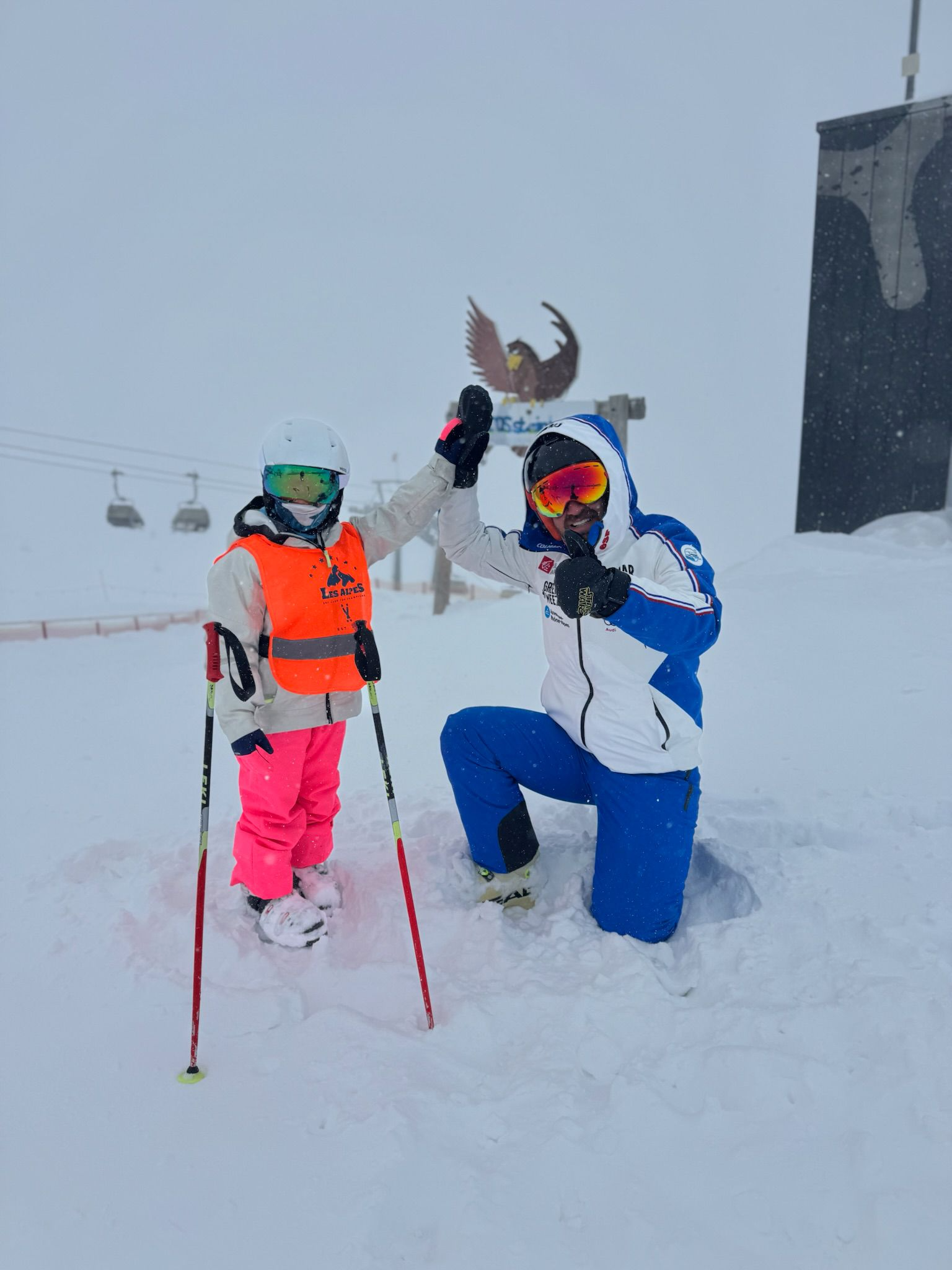
Group tours and lessons offer children the opportunity to socialize and develop teamwork skills. Les Alpes' Beginner and Intermediate levels benefit from group dynamics.
Spending time with other children in the group allows them to form new friendships and experience striving for a common goal (learning to ski). By being inspired and encouraged by each other, children make the learning process more enjoyable. Group lessons can help overcome social anxiety, even for shy children. In Les Alpes camps, the small number of athletes per coach (maximum 3) increases the quality and safety of this social interaction.
Trainers organize small competitions and team games to keep the group dynamic positive. Celebrating achievements, giving small prizes and recognizing everyone's progress increases the overall motivation of the group. This creates a learning culture of solidarity rather than competition. children ski training not only skills but also character development.
For families with children, the choice of ski resort should be based on the additional services offered rather than the difficulty of the slopes. Les Alpes offers a wide range of both domestic and international camps (Palandöken, Austria-Kaprun).
In Turkey children ski training For children, Uludag, Erciyes and Palandöken stand out for their wide, low-slope beginner pistes. The camps organized by Les Alpes in Palandöken offer children the opportunity to train on pistes with the best snow quality in Turkey. Internationally, resorts such as Kaprun in Austria, Serfaus-Fiss-Ladis in Serfaus-Fiss-Ladis or Val Gardena in Italy are known for their children's trails, special chairlifts and the quality of their ski schools.
An ideal child-friendly ski resort:
A successful children's ski vacation, It is not only a matter of good education, but also of good planning. The aim should be for the vacation to be a source of rest and fun, not stress.
Aparthotels and suites are the best accommodation options for families with children, as they offer self-catering facilities and a spacious living area. The close proximity to the ski slopes (Ski-in/Ski-out) eliminates the hassle of carrying equipment in the morning and greatly increases the comfort of the holiday. Les Alpes' camping organizations prioritize this comfort in terms of accommodation and piste access.
Children cannot be expected to ski all day. Therefore, alternative activities such as sledding, snowshoeing, indoor swimming pool or arcade should be included in the vacation plan. Children's cinema or animation programs in the evenings can help them burn off energy and have a good time. Including these social activities in camp programs increases the richness of the experience.
Ski hotels are designed to meet all the needs of children and their families under one roof.
A must for a good ski hotel is a children's club with professional supervisors. These clubs offer educational and fun activities for different age groups. Parents can rest easy knowing that their children are in a safe and enjoyable environment while skiing. The availability of babysitting services is a critical detail for families with younger siblings.
For families with children, ski-in/ski-out hotels offer direct access to the piste from the ski room, saving time and energy. These hotels are often in cooperation with ski schools and offer easy access to the starting point of instruction. The availability of equipment rental and storage services on site is also an important element of comfort.
Les Alpes, kids ski training | Les Alpes Ski Training It makes technical training sustainable and effective by dividing the process into five goal-oriented levels in accordance with the development model. This structure allows each athlete to progress confidently at their own level.
This level is designed for the youngest skiers between the ages of 3.5 and 5, with one-on-one instruction. Training for this age group who are not yet developmentally suitable for group lessons, 12 hours of individual lessons organized in the form of a game. The coach makes the lesson enjoyable and effective by blending techniques with game-based approaches. The main goal is to support basic motor skills while introducing children to skiing in a safe and fun way.
Junior level training not only develops skiing, but also balance, coordination and body awareness. In short bursts, the coach gamifies basic movements, such as walking on snow in ski boots and skiing on a gentle slope, to suit the child's attention span.
Planned for athletes between the ages of 5-15, the Beginner level provides a safe introduction to skiing. At this level, it is aimed to gain basic posture, balance, braking and steering skills. Athletes who participated in the first two camps completed a total of 24 hours of training. By acquiring these basic skills, they complete the Beginner level and gain the ability to skate more controlled on blue pistes.
At the end of the Beginner level, children gain the ability to use the chairlift and ski independently on pistes of intermediate (blue) difficulty. This stage creates a solid and secure foundation for the athlete's entire development journey and reinforces their self-confidence.
24 hours of basic training at the Intermediate level, designed for athletes aged 5-15 12 more hours for a total of 36 hours structured program is practiced. In this process, athletes develop a more controlled, balanced and independent stance on the tracks. Technical development, tempo management and turn variety are the main focuses of this level. Athletes learn to ski much more professionally on blue pistes and deepen their connection with skiing.
Intermediate is the stage where personal style on snow begins to develop, going beyond basic techniques. Instructors help athletes discover their strengths and practice turns at different speeds and rhythms.
Athletes who complete the Advanced level will receive a total of 60 hours of intensive and structured training has successfully left behind. At this stage, advanced training emphasizes speed control, agility, endurance and technical precision. Athletes can now master not only basic skills but also performance-based details. At the end of this level, children between the ages of 5 and 15 qualify as youth athletes and are ready to join the Let's Race race team.
Les Alpes Let's Race Team is a special race team program for children who have successfully completed the Advanced level. Athletes aged 10 years and older This journey opens the door to a professional process leading to the national team. Training sessions are meticulously planned by the Head Coach according to the individual development goals of each athlete. Discipline, technical development and determination are the basic building blocks of this level and support the athlete's physical, mental and emotional development.
Les Alpes, offered by children ski training has a dynamic structure in the field of winter sports by diversifying its programs in four main fields of activity.
Les Alpes, organizes closed group camps offering special programs for families of corporate companies. These camps provide a family-specific, safe and fun winter vacation experience. In addition, it establishes school teams with school partnerships, plans trainings and professionally manages the whole process on behalf of the school. This allows young athletes to continue skiing in a disciplined way in a school environment.
Camp organizations abroad give children international experience. For example, November 9-14, 2025 Austria- Kaprun camp allows children to train in different snow conditions and to international standards. These camps promote not only skiing skills, but also cultural adaptation and foreign language practice.
Training in a world-class center like Kaprun broadens children's skiing vision. Training on high-altitude pistes on the glacier maximizes the athletes' endurance and technical precision.
Let's Race, Les Alpes’s performance-oriented racing team, where future champions are trained. This youth program goes beyond technical competence and supports the athlete's physical, mental and emotional development. As an example, the success of Ada, an athlete who rose from National Team C to National Team A in the U14 category, demonstrates the proven effectiveness of this system.
Children's ski training | Les Alpes Ski Training Let's examine four different use cases to understand how their programs respond to different needs.
Ada is an enthusiastic skier, but a little afraid of snow and speed. Her family wants Ada to love the sport and get off to a safe start.
Ada starts with one-on-one instruction appropriate to the Junior level. The instructor introduces the skis as “big shoes” and gets her used to the equipment. The basic sliding motion is taught through animal imitations such as “penguin walk” and “bear walk”. These games turn Ada's fears into fun and build basic confidence in 12 hours of individual lessons.
Ada's first goal is to learn how to glide downhill in a controlled manner and create the “Snow Slingshot”. (Pizza) technique to learn how to stop safely. The instructor supports Ada by holding her by the hand on a short and very gently sloping area. Her successes are immediately celebrated, which quickly boosts Ada's self-confidence and sets the stage for the transition to Beginner level.
Efe is an energetic child who has skied for two seasons before, can make basic turns but struggles with parallel turns and is starting Intermediate level.
Efe's Intermediate training focuses on abandoning the Snow Slingshot formation and learning to hold the skis parallel. In a structured 36-hour program, the instructor asks him to make turns with a “short-short-long” rhythm. At this stage, the techniques of placing the center of gravity in the correct position and using the ski edges are explained in detail. Efe learns how to make faster and sharper turns with less energy.
An increase in speed is inevitable on intermediate pistes. The instructor teaches Efe how to control the snow despite the increased speed, how to keep a safe distance especially on crowded pistes and how to be a responsible skier by following the piste rules. Skiing skills in bad weather conditions (fog, hard snow) are also developed at this level.
The Caner family attends a weekend closed group camp where parents can take ski lessons and spend time with their children in the evenings.
Children during the day Les Alpes trainers (maximum 3 athletes per coach), while parents participate in their own lessons. Lunch and short breaks are planned for the family to come together. This structure allows parents to instantly share their child's excitement and progress throughout the day, while improving their own skiing skills. Feedback sessions after dinner reinforce the family learning process.
Evening programs are the social spirit of the camp. Storytelling, roasting marshmallows or board game tournaments are organized around the campfire. These activities allow children to build more intimate relationships with both their instructors and other families. In this way, closed group camps become not only sporting but also a rich social experience.
12-year-old Deniz is about to complete his Advanced level and Les Alpes to gain international experience by participating in an international ski tour (e.g. Austria-Kaprun camp).
In the Alps, the quality of snow and the variety of pistes are different than in Turkey. During his training, Deniz learns powder snow, icy snow and skiing techniques on different slopes. The instructor shows him how to adjust the ski edge angle according to the type of snow and how to maintain balance on difficult terrain. This adaptation makes him a well-rounded skier and increases his ability to join the Let's Race Team.
In international camps, the language of instruction is usually English or German. Les Alpes, By working with instructors who are fluent in foreign languages, it allows Deniz to practice both the language of skiing and conversational English. This is not only an opportunity for sporting development, but also for cultural and linguistic development.

Parents children ski training The most frequently asked questions and answers are compiled below.
Most ski schools consider 4 years old to be the starting age. Les Alpes’in Junior level 3.5 years makes it possible to start with one-to-one training. It is important that the child's motor skills are developed and that they can understand and follow the instructor's instructions, rather than chronological age. Before skiing, it is useful to practice with simple coordination toys such as a balance board.
The equipment required are:
Because children have short attention spans, lesson times are shorter than for adults, with frequent breaks in between. Les Alpes The training periods in the methodology are as follows:
Ski lessons In addition, instructors provide scientific information about snow, mountaineering culture and the basic principles of first aid. These activities increase children's interest in winter sports and instill in them a general culture and sense of responsibility. This approach, Les Alpes’s philosophy focusing on the development of sports culture and self-discipline.